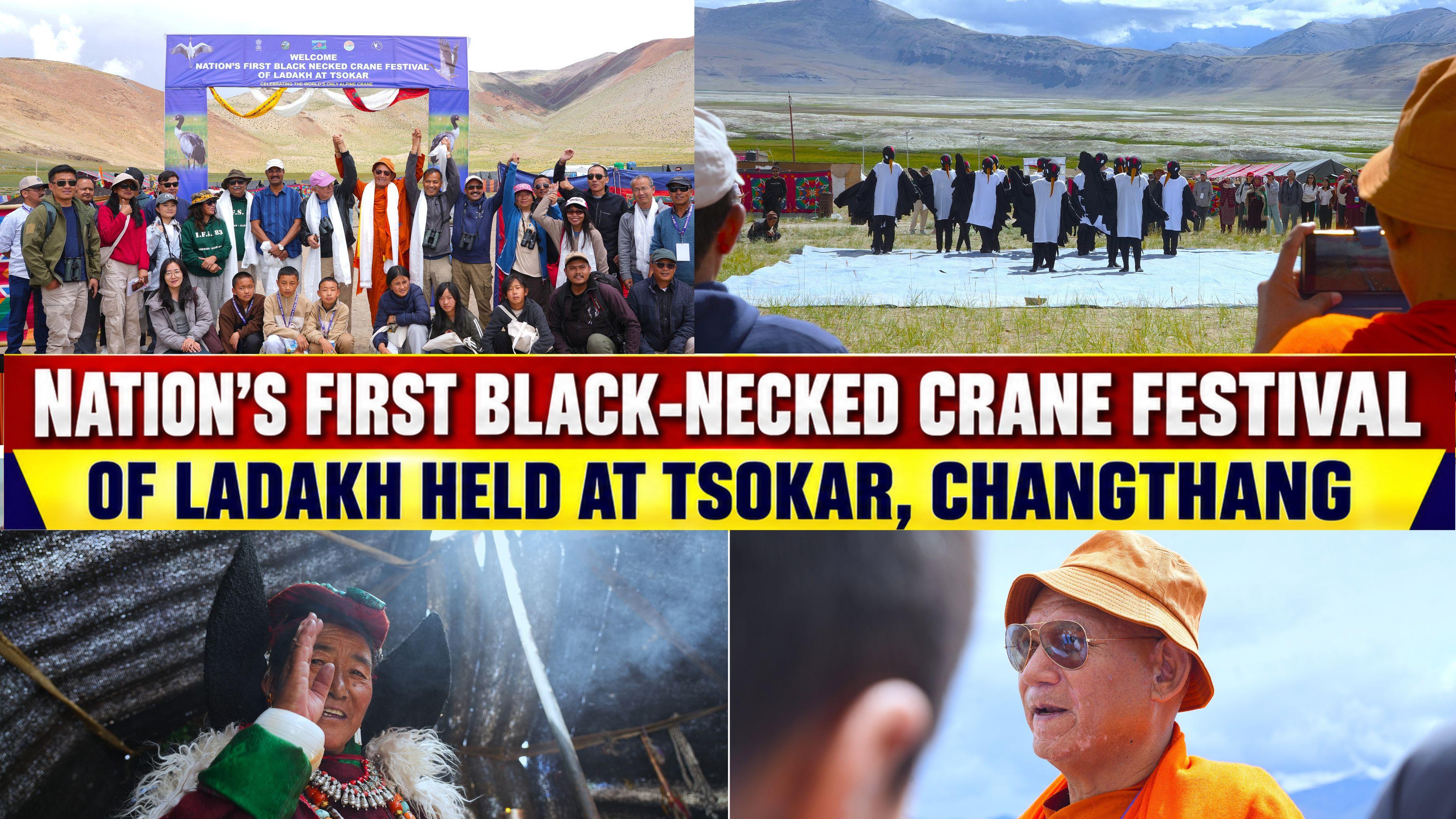
Black-Necked Crane Festival Delegates visit Tsokar Wetland Complex to Witness Conservation Efforts and Black- Necked Cranes in the Wild
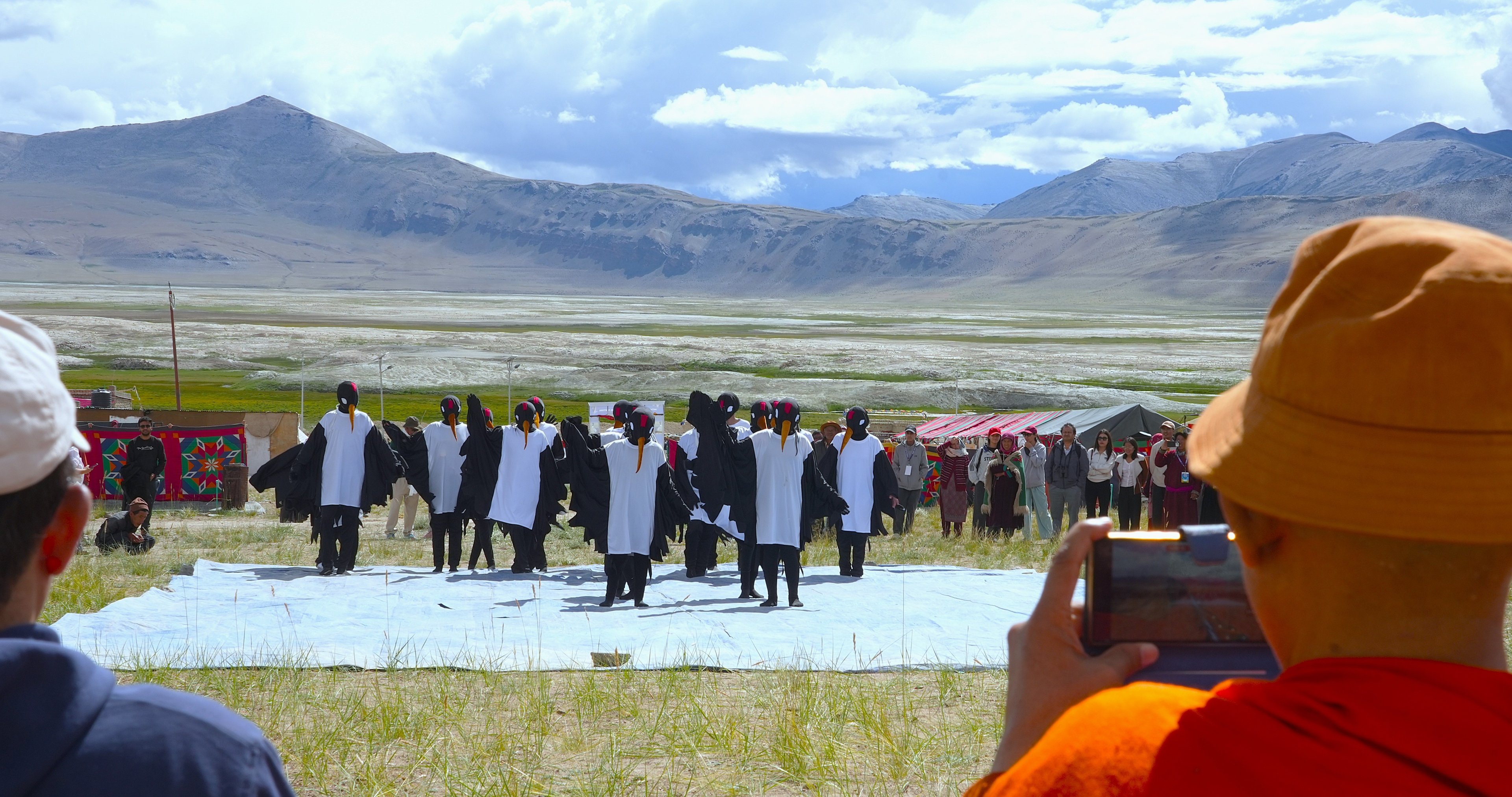
Tsokar, Ladakh 13 August 2026: As part of the Black-necked Crane Festival, delegates and an international team of crane conservation scientists undertook a field visit to the Tsokar Wetland Complex, one of Ladakh’s most important habitats for the globally vulnerable Black-necked Crane. The field visit provided participants with a first-hand experience of the unique high-altitude wetland ecosystem and the remarkable conservation efforts being undertaken by the Government, scientific institutions and local communities for the protection of the species.
The international delegation was led by Dr. George Archibald, Co-founder of the International Crane Foundation (ICF), along with leading crane experts and scientists from different countries. The delegates participated in a Black-necked Crane Nature Trail, during which they had the memorable opportunity to observe Black-necked Cranes in their natural habitat, including adults accompanied by young chicks. The sighting offered an exceptional opportunity for the visiting scientists, conservationists and other festival participants to understand the ecology, breeding behaviour and habitat requirements of the species in the high-altitude landscape of Changthang.
The visit also provided an excellent overview of the Black-necked Crane habitat at Tsokar, including its wetlands, surrounding grasslands and associated breeding areas. The field experience highlighted the importance of maintaining the ecological integrity of Tsokar as a critical breeding and staging habitat for the species and reinforced the need for continued collaboration among government agencies, scientists and local communities.
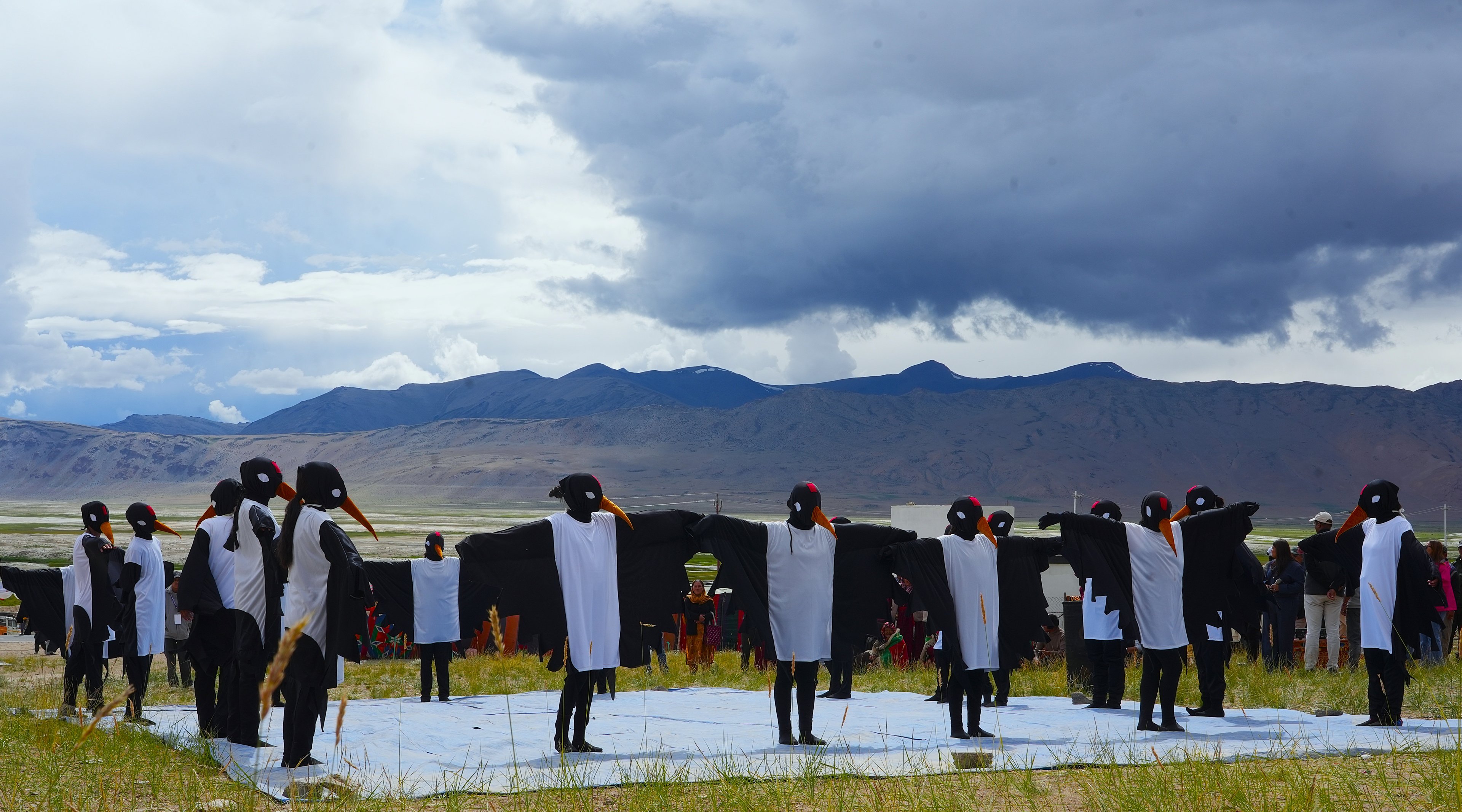
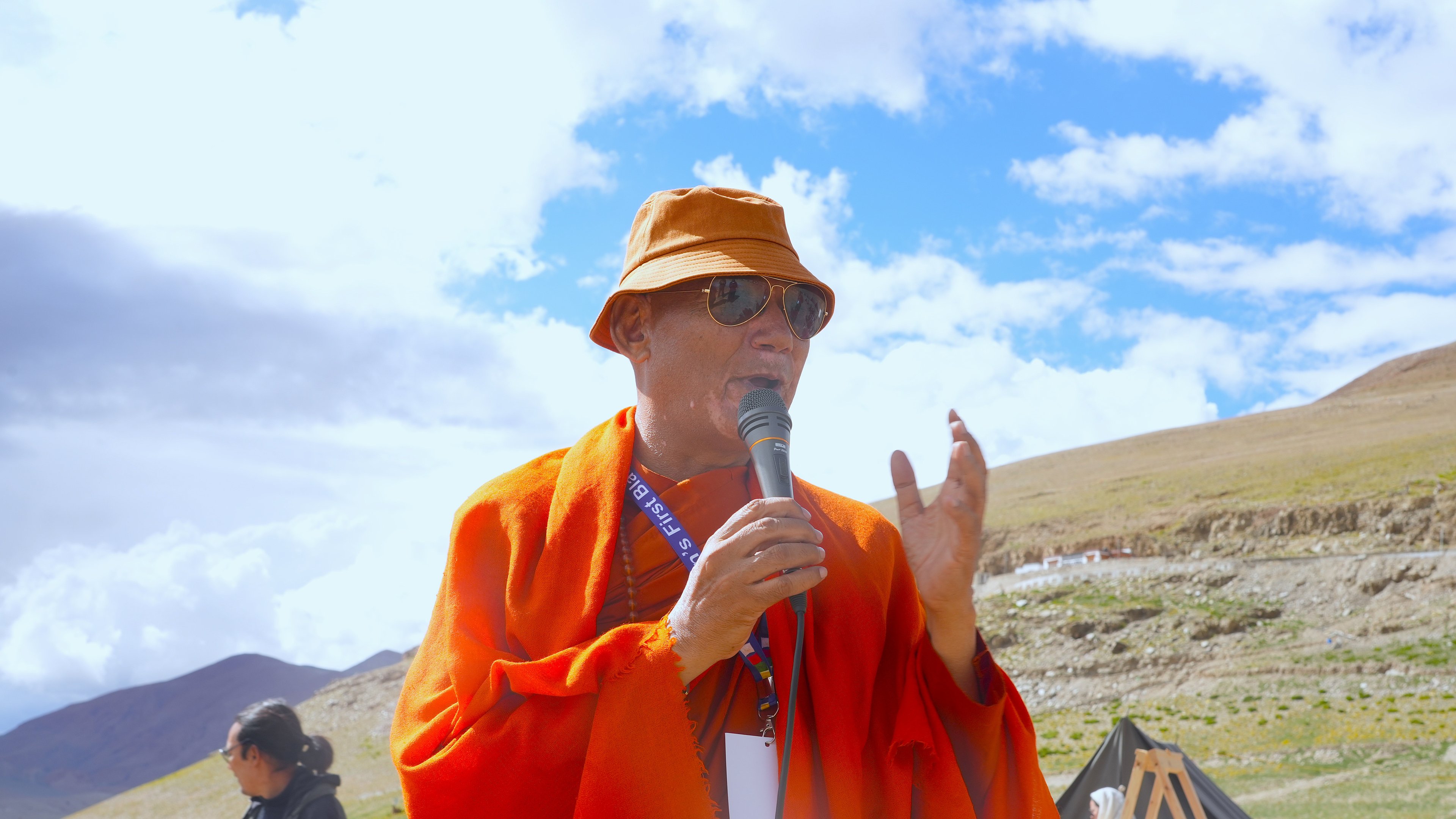
During the field programme, Ven. Bhikkhu Sanghasena, Founder President of Mahabodhi International Meditation Centre (MIMC) and Save the Himalayas Foundation, felicitated Mr. Rajesh S. Kumar, Chief Wildlife Warden, Ladakh, and officers and frontline staff of the Department of Wildlife Protection, UT Ladakh, in recognition of their dedicated efforts and excellent work in organizing the Black-necked Crane Festival and the field visit to Tsokar. He appreciated the leadership of the Wildlife Department in bringing together conservationists, scientists, local communities and international experts on a common platform for the conservation of the Black-necked Crane and its fragile Himalayan habitats.
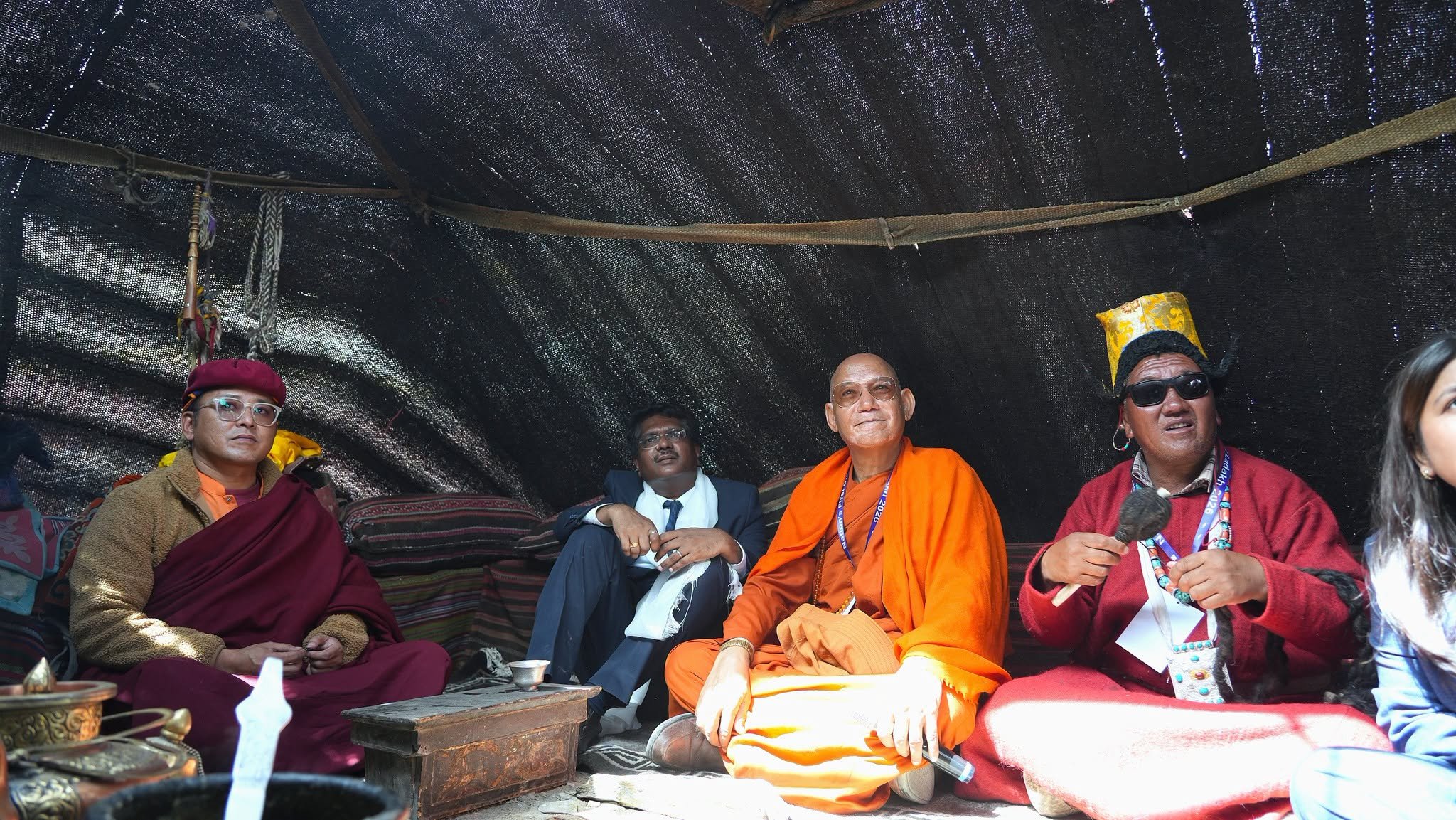
Ven. Sanghasena also felicitated representatives of the local community of Tsokar for their valuable contribution to the conservation of Black-necked Cranes. He emphasized that the long-term protection of the species would not be possible without the active participation, traditional knowledge and stewardship of local communities who share their landscape with these magnificent birds.
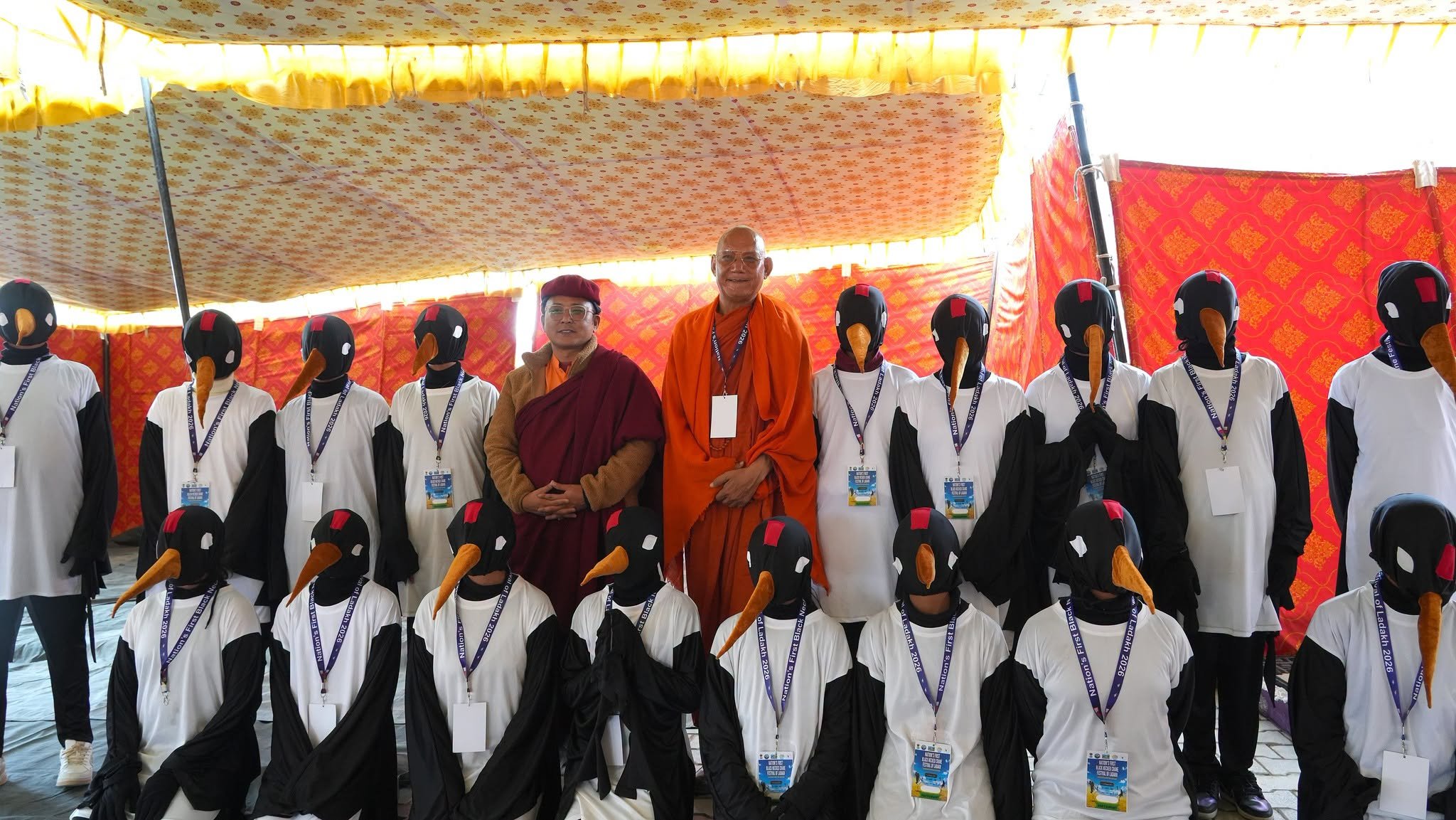
The medical and emergency support provided during the field visit was also acknowledged. The Chief Medical Officer (CMO), Leh, and his team, including doctors from the Indian Army, were felicitated for providing essential medical backup and ensuring the health and safety of participants travelling to the remote and high-altitude Tsokar region. Their support was particularly valuable given the challenging terrain, altitude and climatic conditions of the field programme.
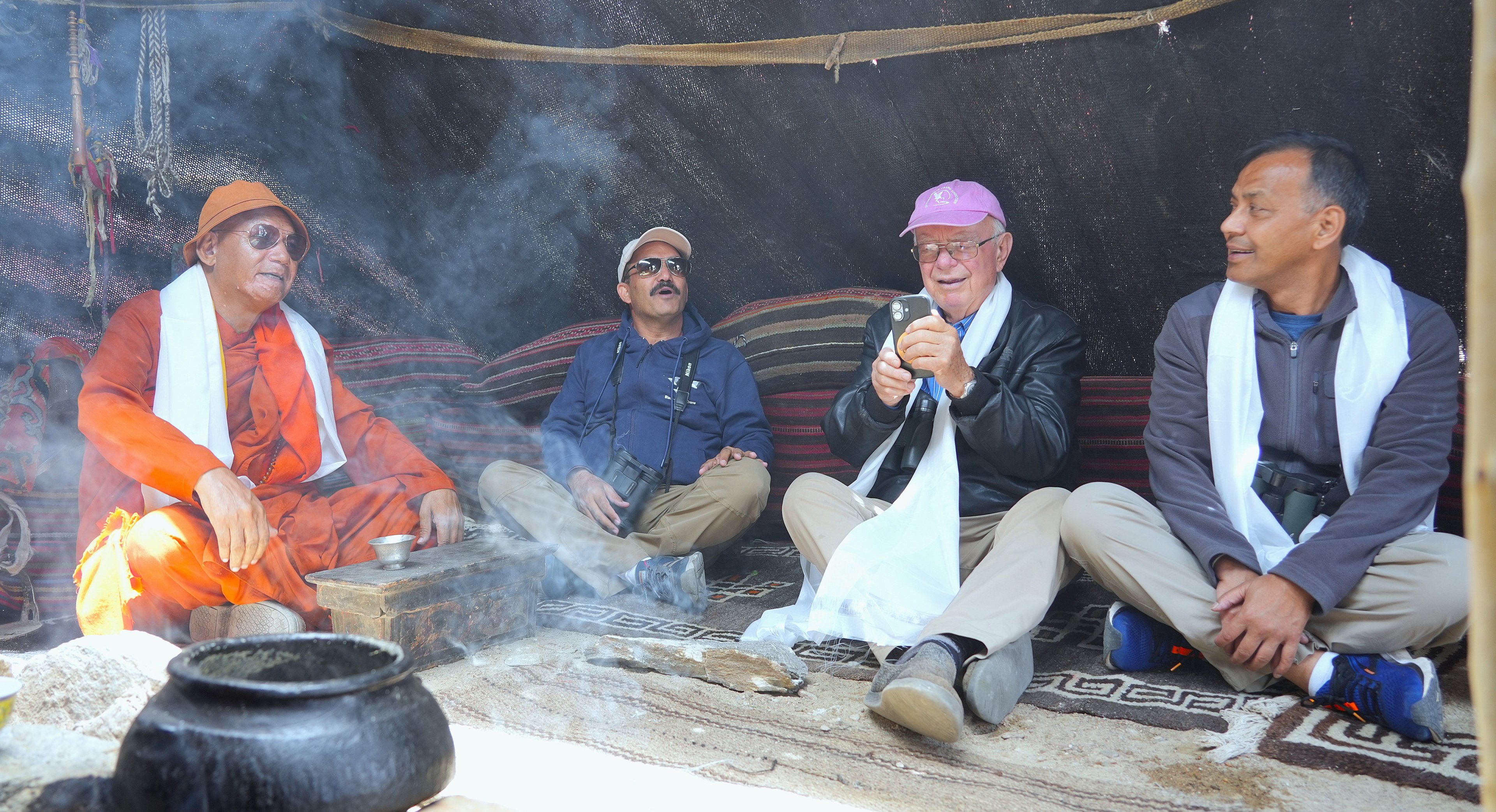
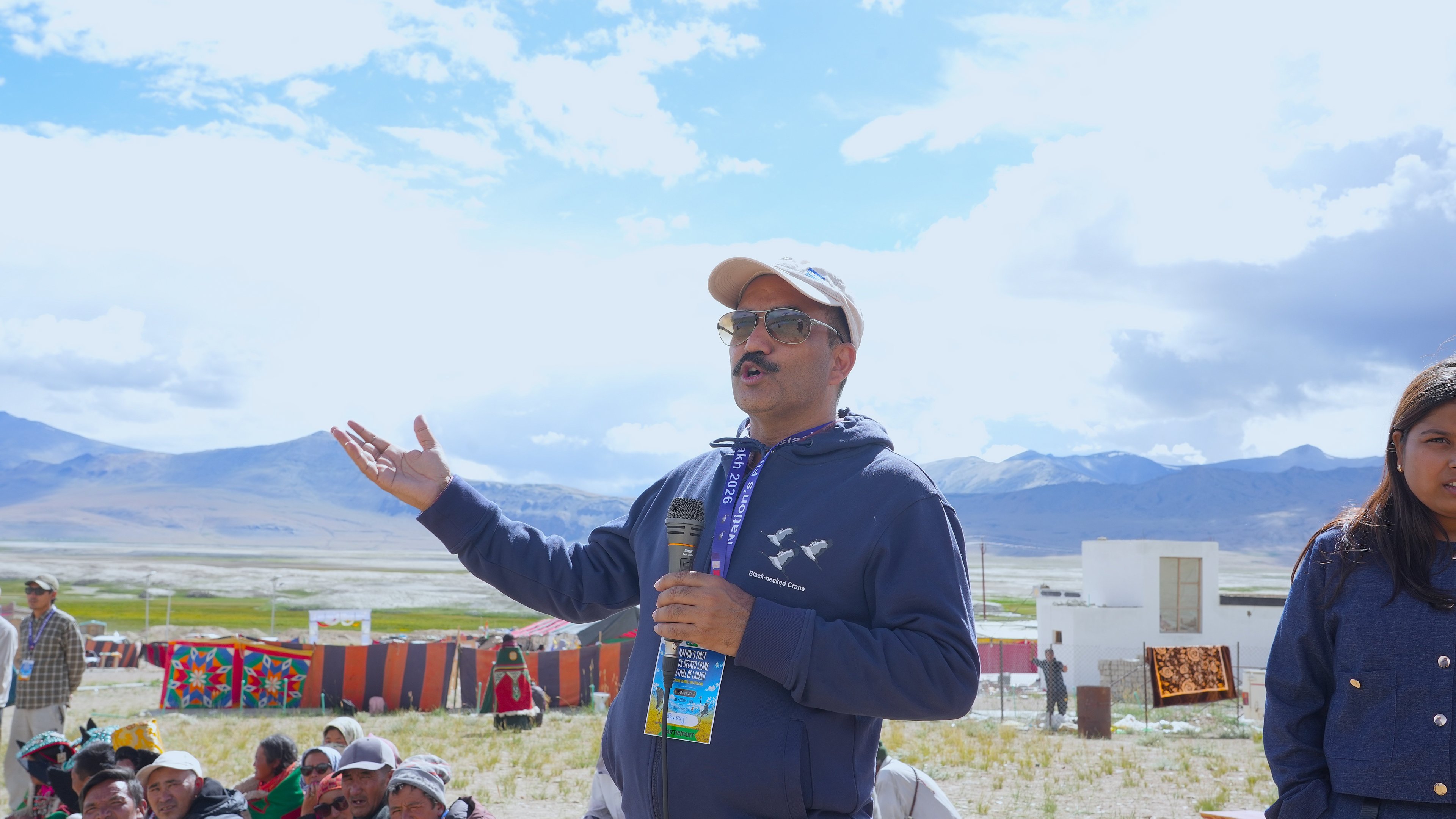
Sharing his extensive field experience, Dr. Pankaj Chandan, Senior Wildlife Conservation Scientist, Save the Himalayas Foundation, briefed the delegates on important field-related issues concerning Black-necked Crane conservation in Ladakh. Drawing upon his years of research and conservation work across the Himalayan region, Dr. Chandan highlighted the importance of protecting breeding wetlands, minimizing disturbance, addressing emerging threats and strengthening community-based conservation and scientific monitoring across the species’ range in Ladakh.
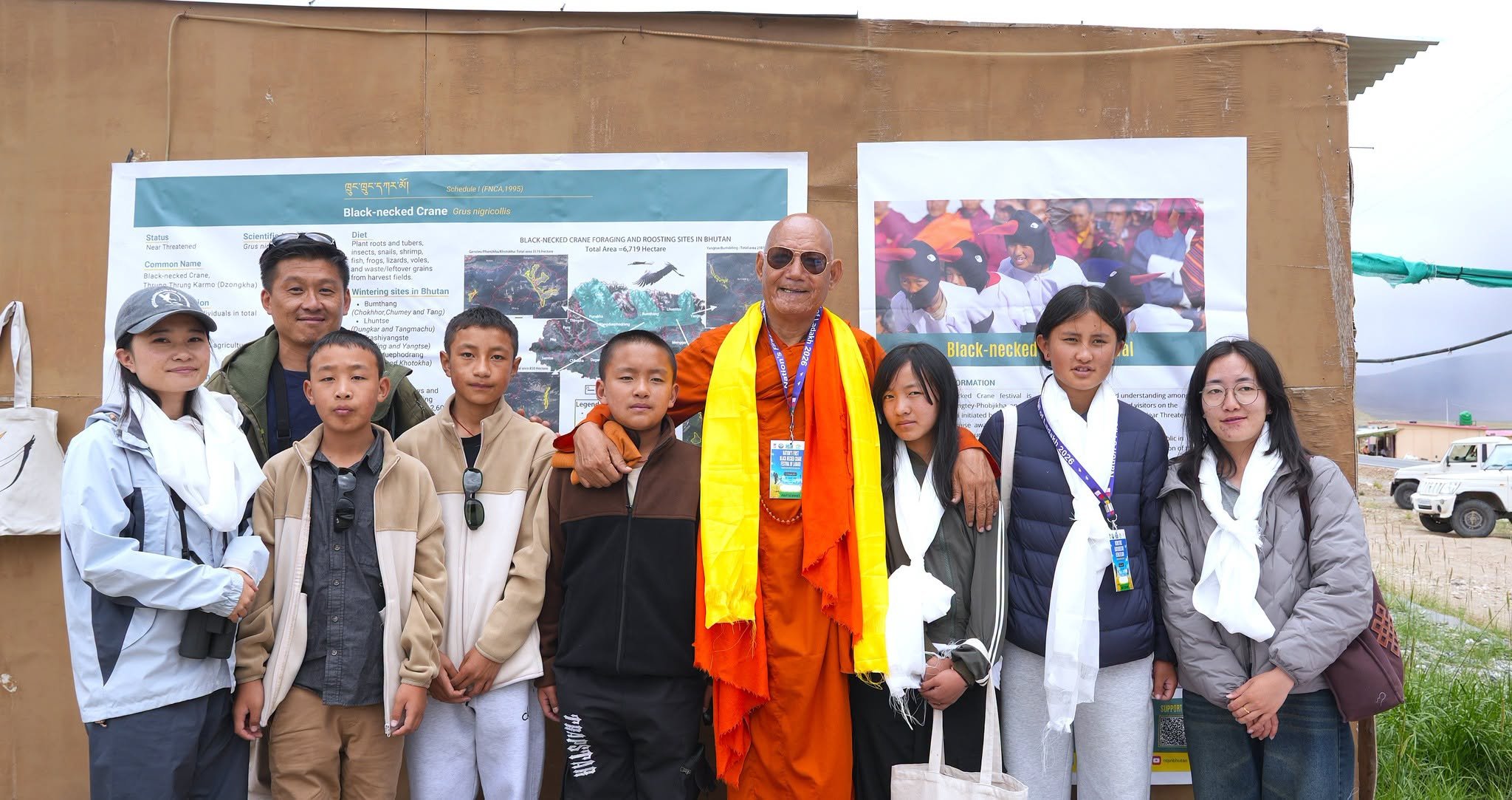
The Tsokar field visit emerged as one of the most significant experiential components of the Black-necked Crane Festival, allowing international scientists and conservation practitioners to move beyond conference discussions and directly experience the landscape, people and wildlife that form the foundation of crane conservation in Ladakh. The sighting of Black-necked Cranes with their young chicks was a particularly powerful reminder of the success that can be achieved through sustained conservation efforts and community stewardship.
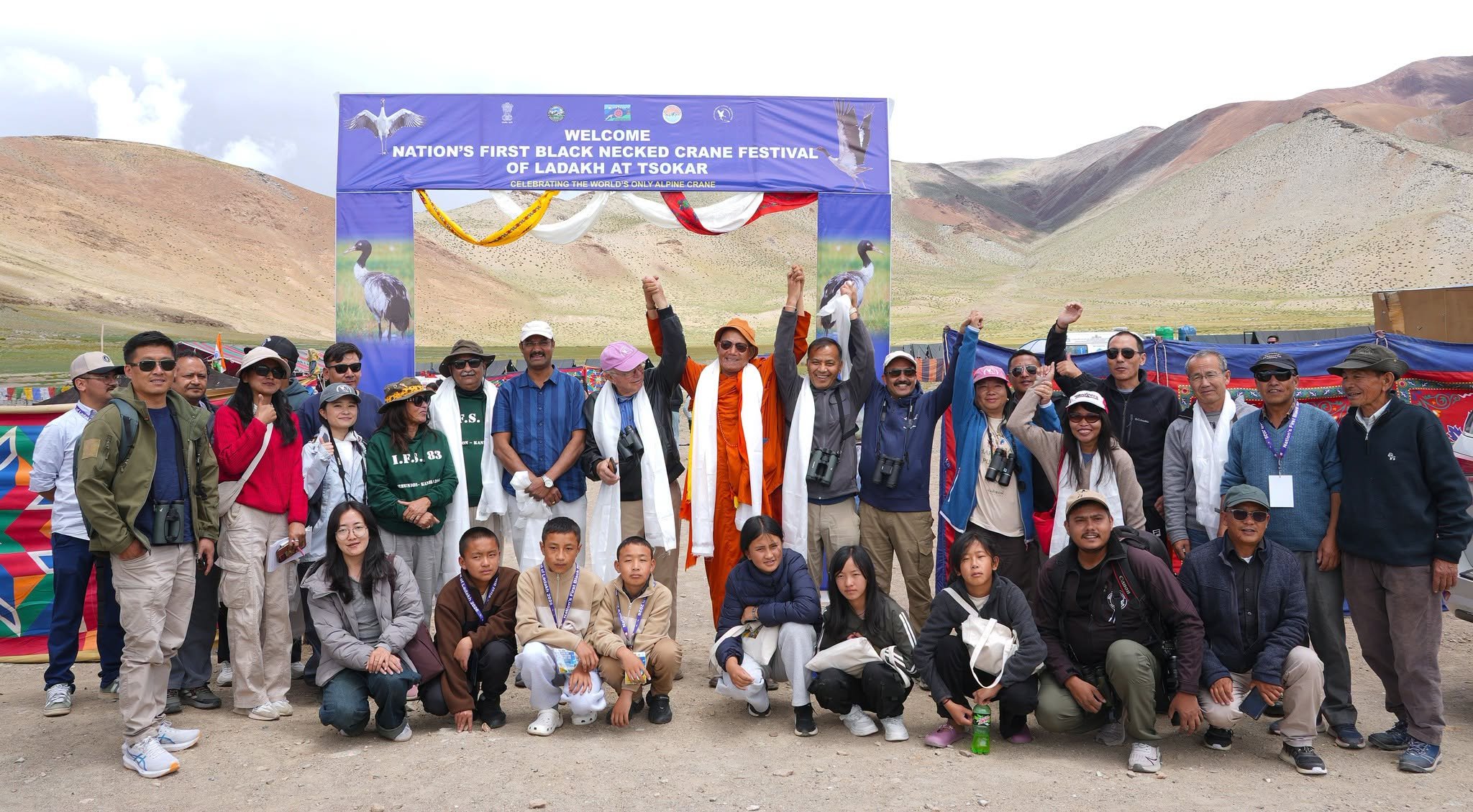
The visit reaffirmed the shared commitment of the Government of UT Ladakh, International Crane Foundation, Save the Himalayas Foundation, Mahabodhi International Meditation Centre, local communities and the international crane conservation community to work together for the long-term protection of the Black-necked Crane and the fragile high-altitude wetlands of the Himalayas.