MIMC Host First International, Black-Necked Crane Festival in Ladakh, bringing together Himalayan and Global Conservation Community
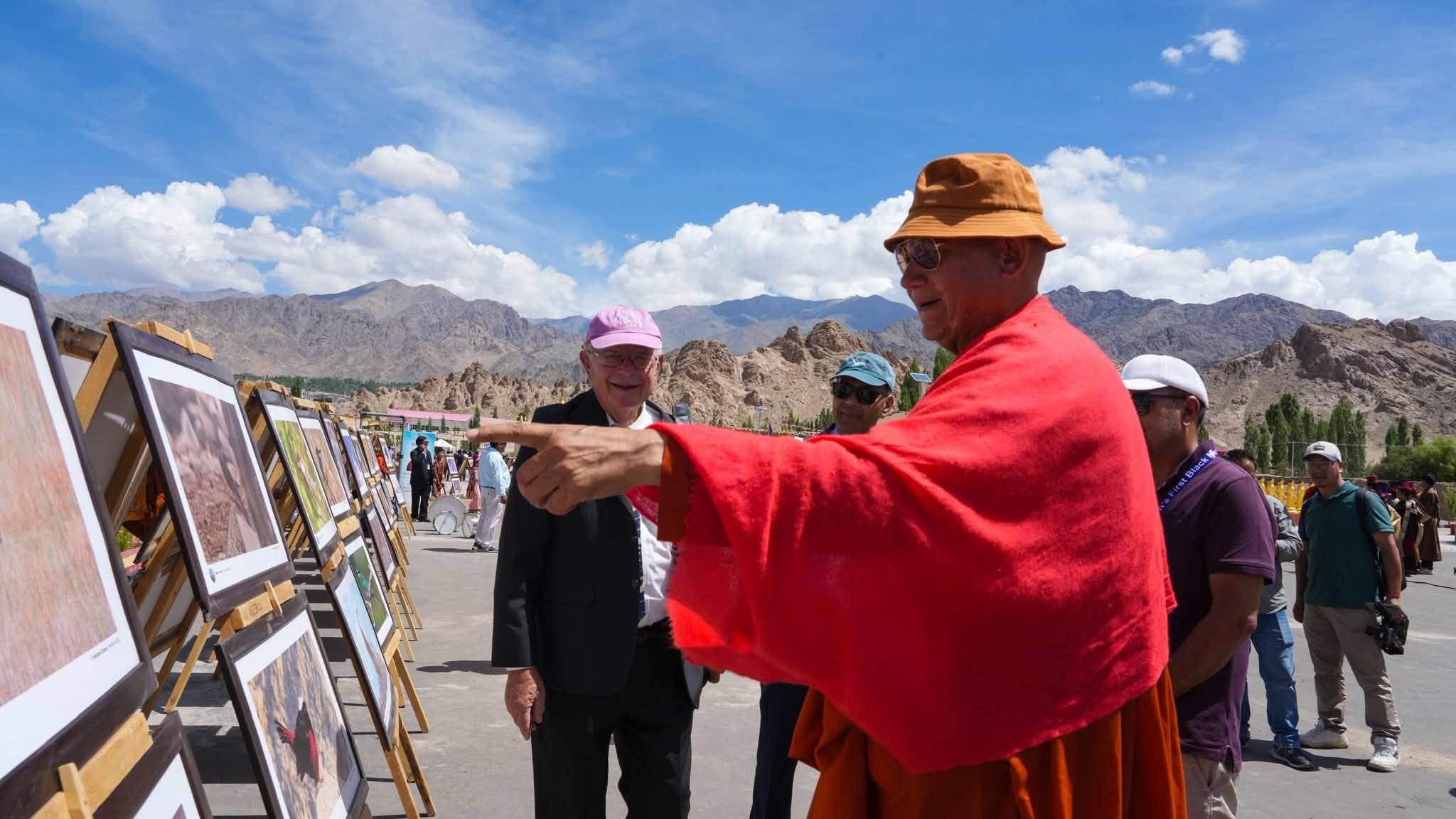
The Mahabodhi International Meditation Centre (MIMC) hosted the first International Black-necked Crane Festival in Ladakh, bringing together an exceptional gathering of conservationists, scientists, wildlife experts, scholars, students and environmentalists from India and abroad to celebrate the Black-necked Crane and strengthen collective efforts for the protection of the fragile Himalayan ecosystem.
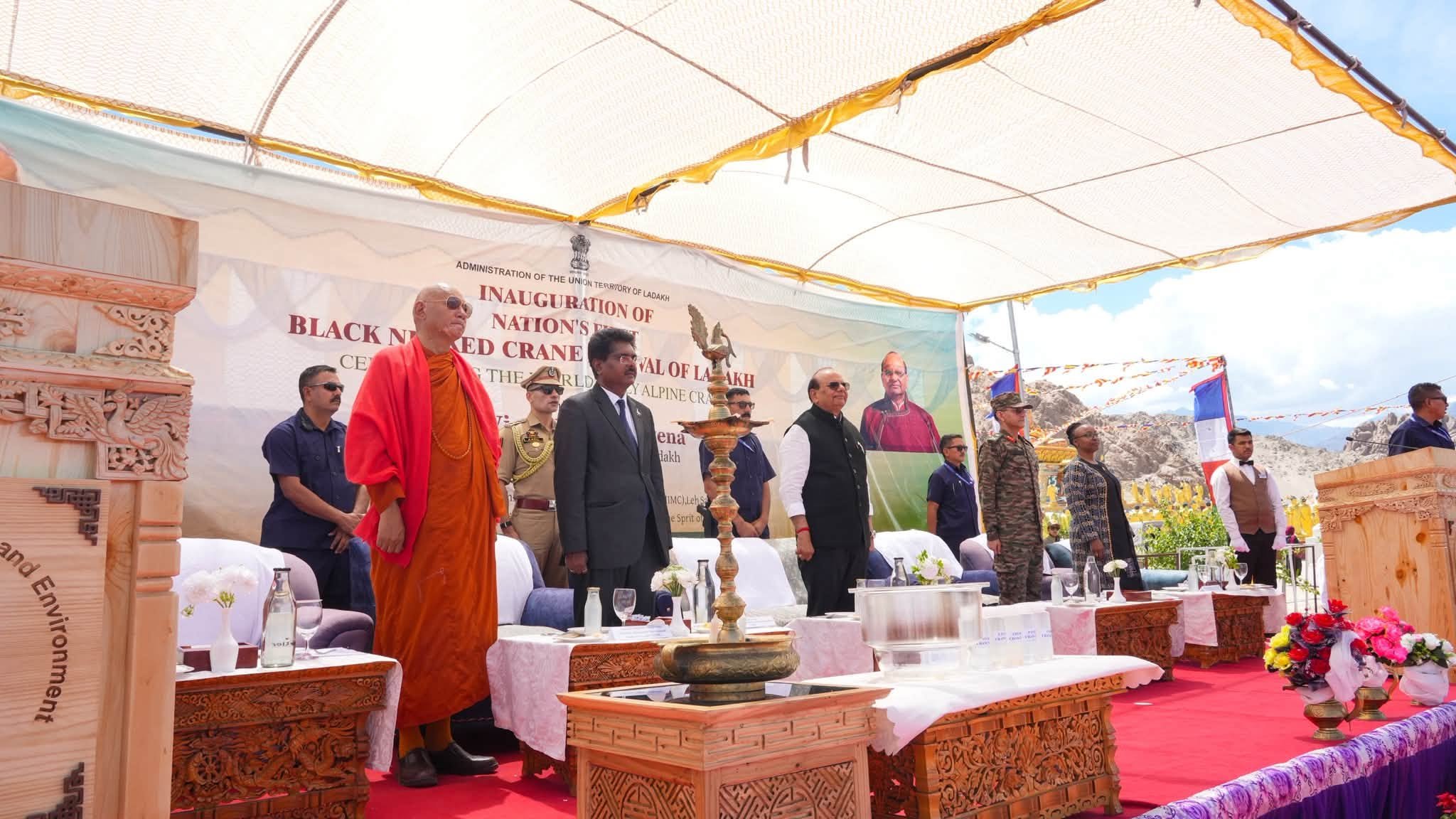
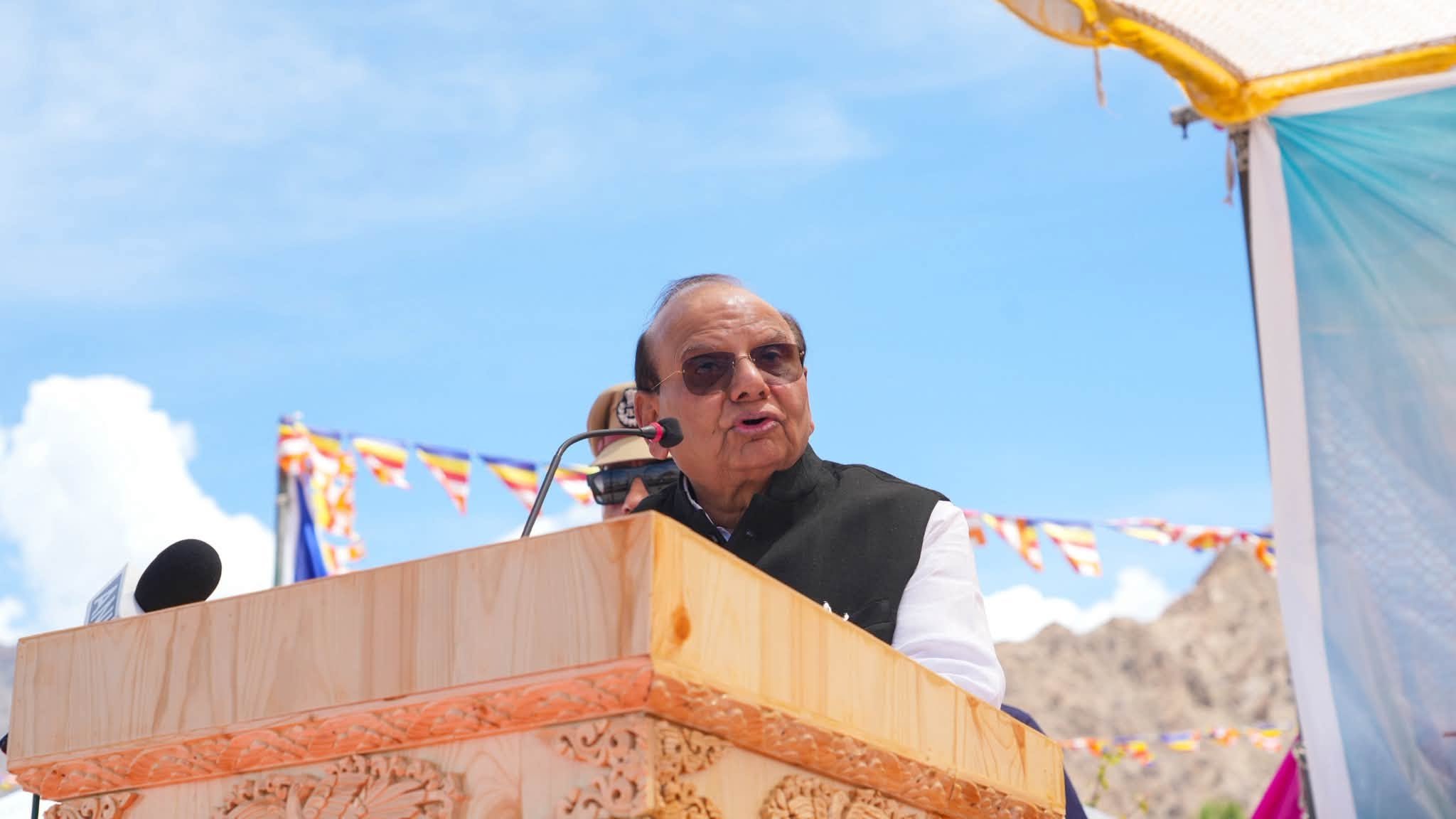
The Festival was inaugurated by the Hon’ble Lieutenant Governor of Ladakh, Shri Vinai Kumar Saxena, who attended as the Chief Guest. The programme was also attended by Shri Rajesh S., IFS, Principal Chief Conservator of Forests and Chief Wildlife Warden, UT Ladakh; Ms. Shashanka Ala, IAS; senior officials of the UT Administration and Department of Forest, Ecology & Environment, along with distinguished guests and delegates from India and abroad.
A major highlight of the festival was the presence of Dr. George Archibald, Co-Founder of the International Crane Foundation (ICF), USA, one of the world's foremost voices in crane conservation, along with Dr. Mahindra Shreshtra and members of the International Crane Foundation.
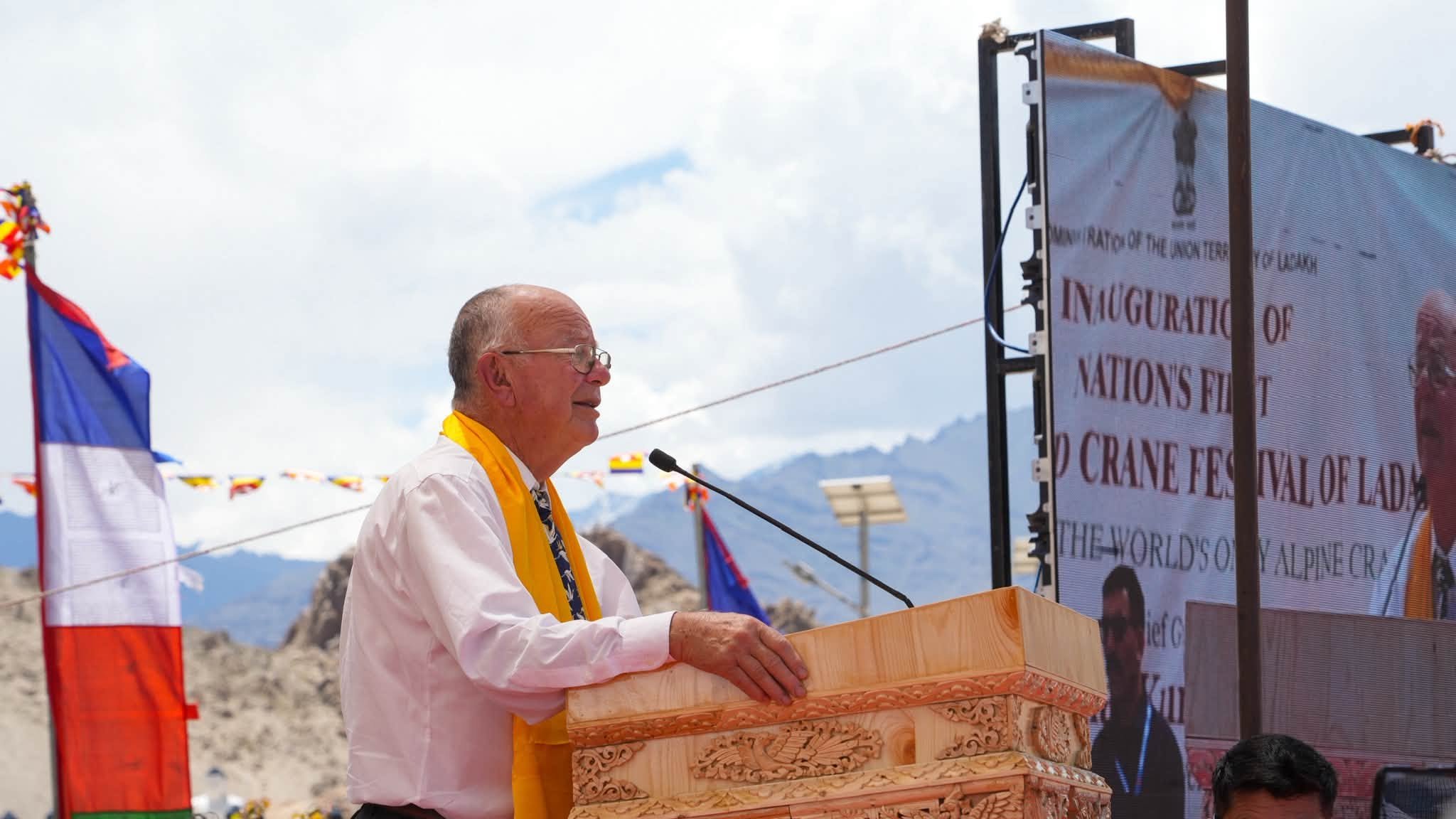
The Festival also brought together distinguished scientists, conservationists, experts and scholars from the Royal Society for Protection of Nature (RSPN) Bhutan, the Royal Government of Bhutan, the International Crane Foundation, USA, Nepal and various parts of India.
A particularly special presence was that of students and teachers from Phobjikha Valley, Bhutan, home to the renowned, Black-necked Crane Festival of Bhutan. Their participation marked an important beginning towards greater student, cultural and conservation exchange between Ladakh and Bhutan.
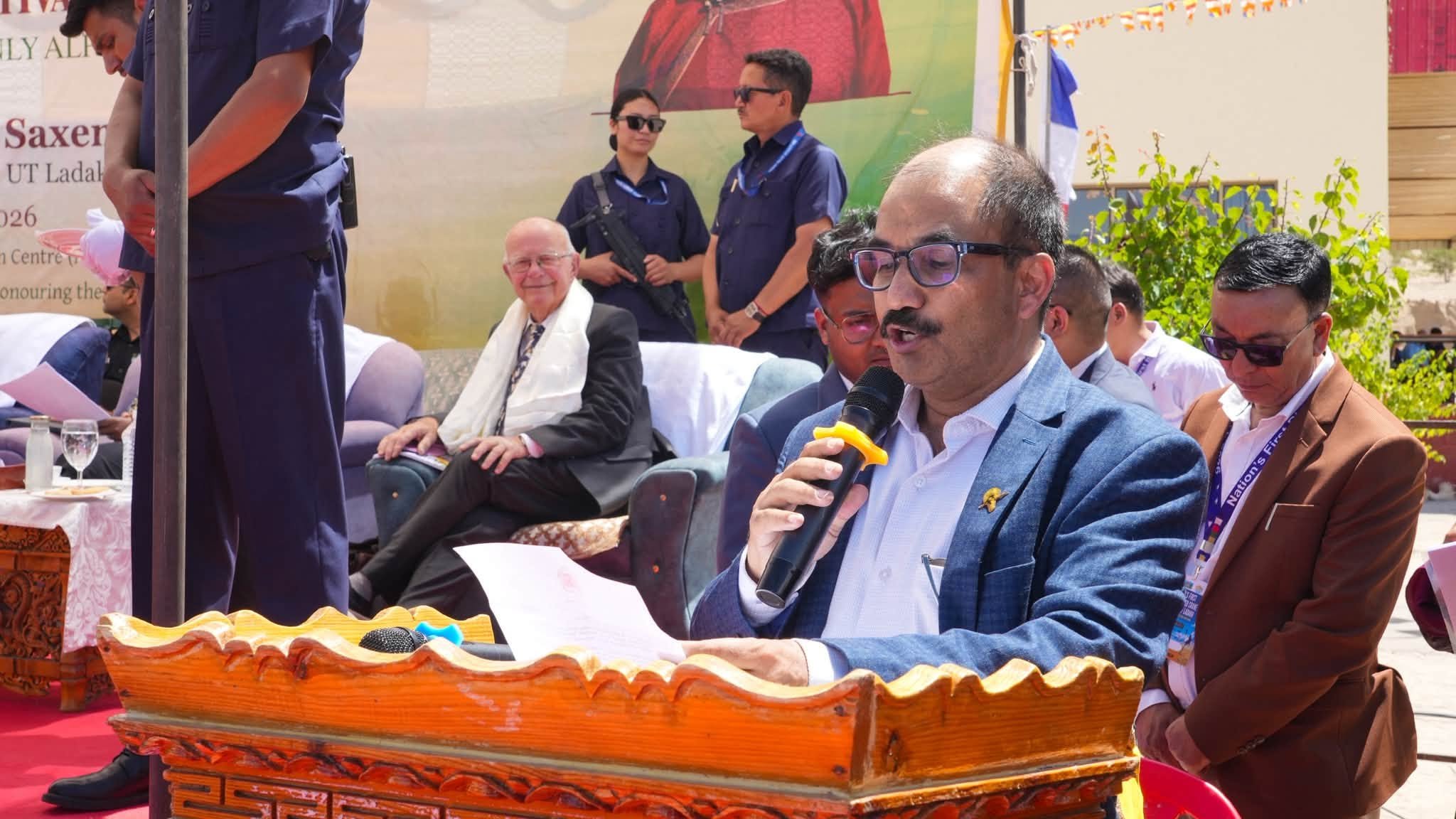
The Festival was inspired by the Black-necked Crane Festival of Phobjikha Valley, Bhutan, following Ven. Bhikkhu Sanghasena's visit to Bhutan last year, where he had attended the Festival as Chief Guest. Deeply moved by the community's love for the cranes and its conservation ethos, Ven. Bhikkhu Sanghasena envisioned bringing the spirit of that Festival to Ladakh.
Together with Dr. Pankaj Chandan, senior wildlife scientist and Executive Director of the Save the Himalayas Foundation, MIMC worked towards transforming this vision into reality. The initiative subsequently received the support and cooperation of the UT Administration and the Department of Forest, Ecology & Environment, enabling it to grow into a larger platform for conservation, scientific exchange and Himalayan cooperation.
The Festival followed the Black-necked Crane Regional Meeting held at the India International Centre, New Delhi, where participating scientists and experts discussed conservation science, research, monitoring, habitat protection and possibilities for greater collaboration across the species' range. Dr. Pankaj Chandan played a key role in coordinating the regional meeting.
The Black-necked Crane, the State Bird of the Union Territory of Ladakh, remained at the heart of the Festival. The gathering highlighted the ecological importance of Ladakh's high-altitude wetlands and the need for long-term conservation through scientific research, community participation, environmental awareness and youth engagement.
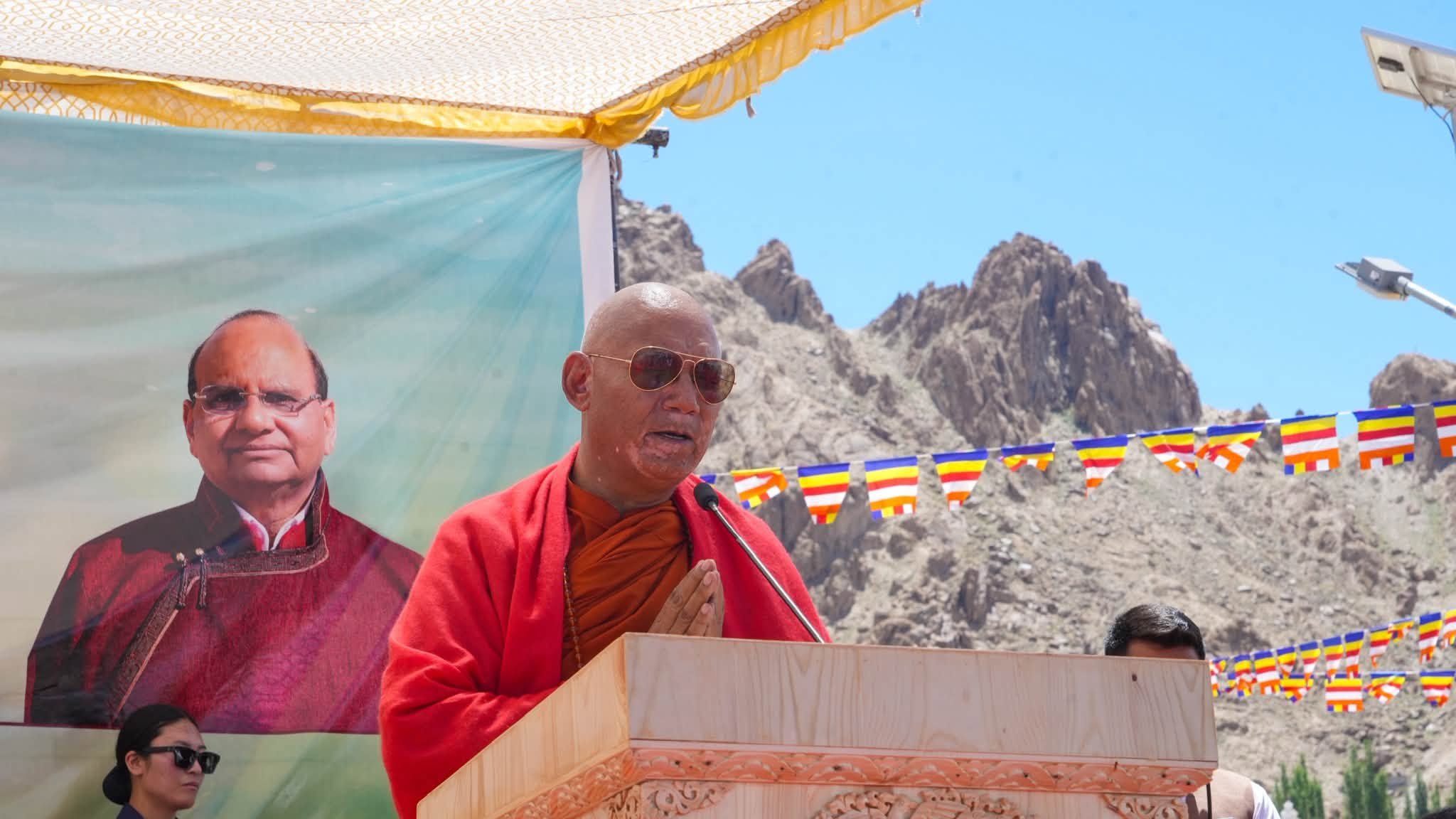
Addressing the gathering, Ven. Bhikkhu Sanghasena emphasised the deep connection between compassion and conservation, drawing upon the Buddhist principle of Mahakaruna, or great compassion.
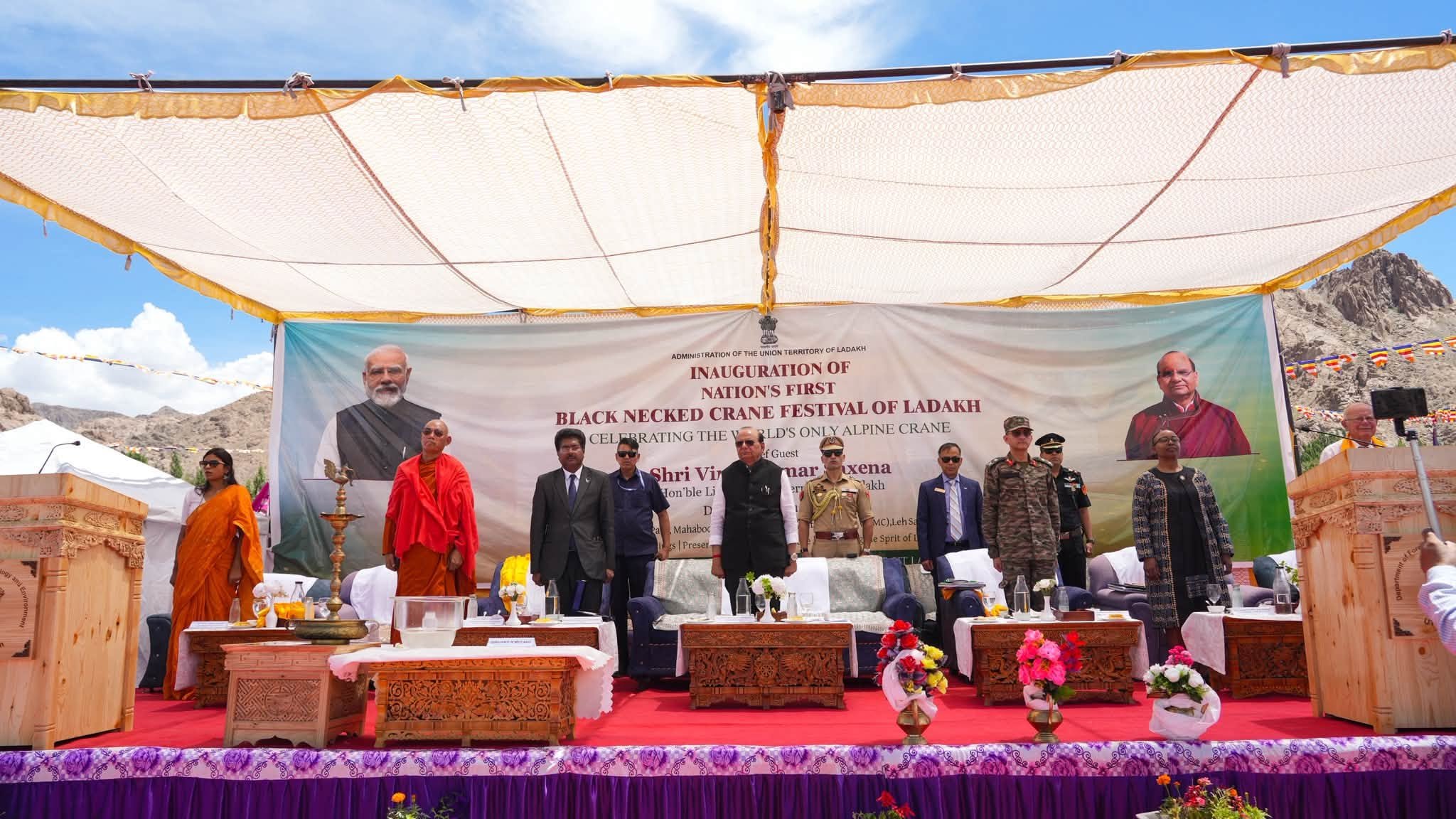
“Conservation is compassion in action,” he said, stressing that protecting a bird, a wetland, a river, a forest or a mountain for future generations is itself an act of compassion.
He also described the Black-necked Crane as a potential messenger of peace in the Himalayan region, noting that the birds cross human-made boundaries between the Himalayan countries and regions.
The Festival carried the special blessings of His Holiness the Dalai Lama, who had been invited to attend the inaugural ceremony. Although His Holiness could not participate in the formal function, he had personally visited and blessed the Festival site two days earlier and sent a special message highlighting peace, non-violence, compassion and humanity's responsibility towards all living beings.
A major focus of the Festival was scientific cooperation and knowledge exchange. The participation of experts from Bhutan, the United States, Nepal and different parts of India provided an opportunity to explore collaborative research, conservation strategies, habitat monitoring and long-term protection of the Black-necked Crane.
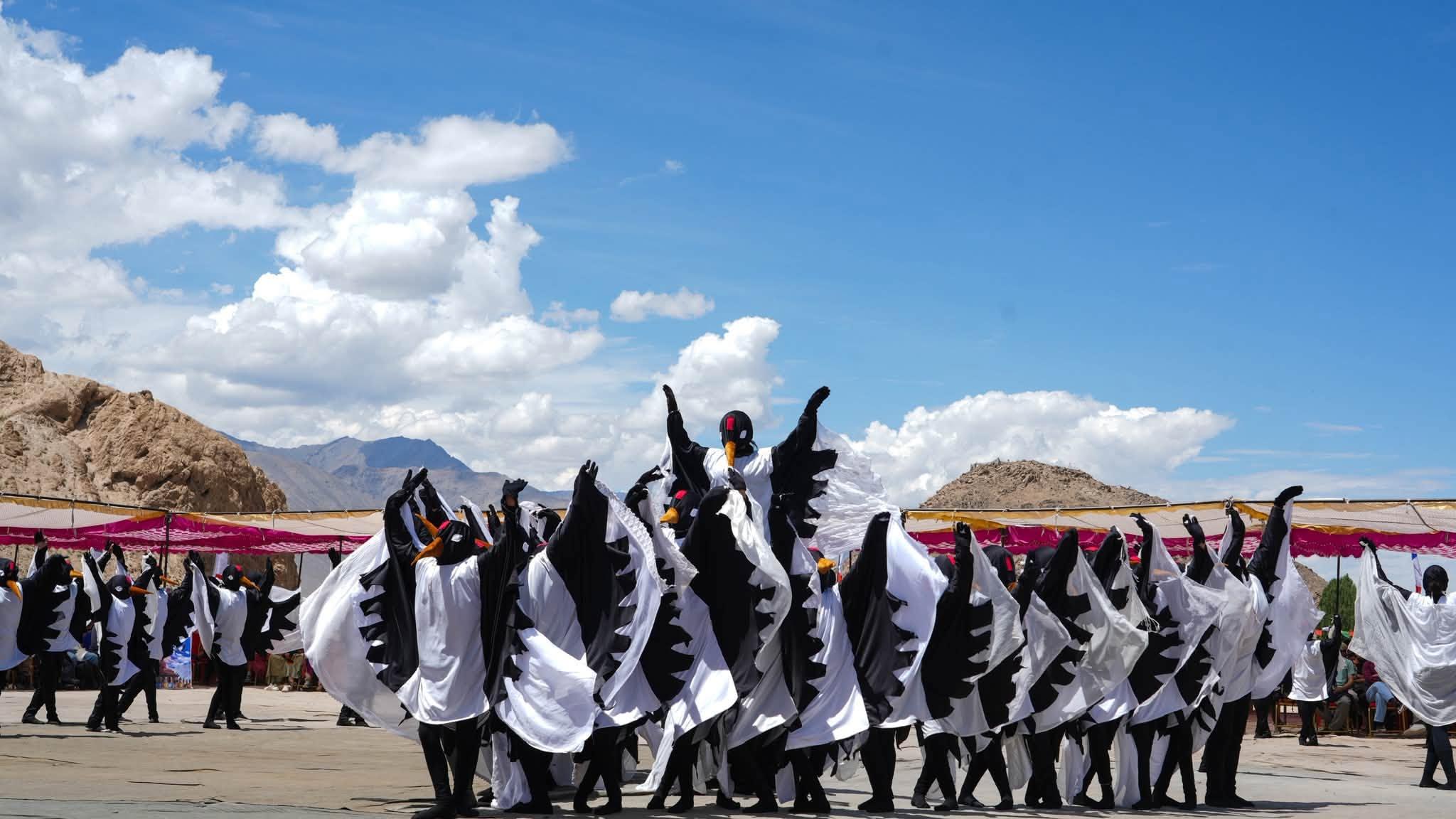
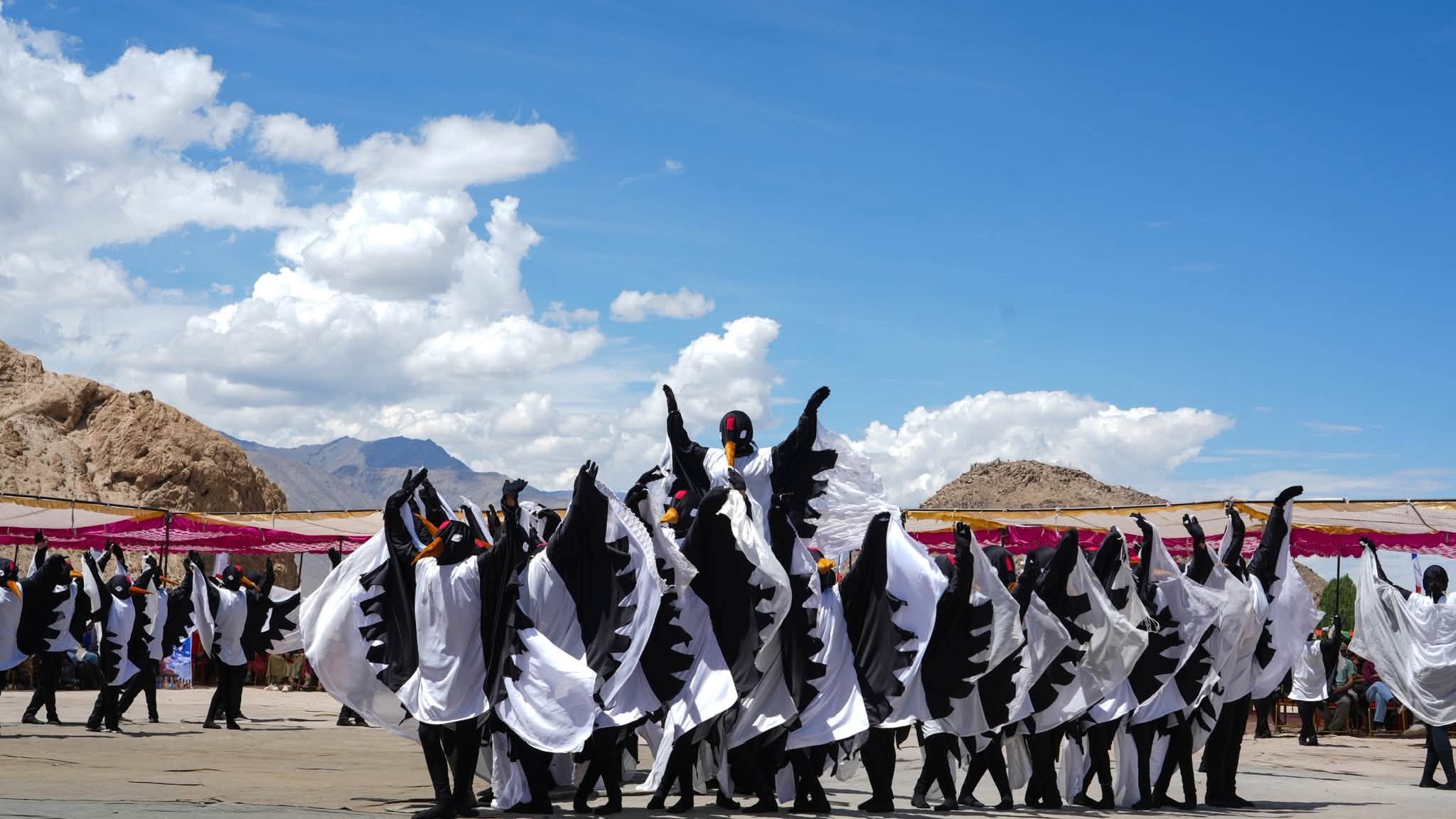
The Festival also highlighted the importance of youth in conservation. Students from MIMC and the visiting students from Phobjikha came together in a special cultural programme, presenting performances dedicated to compassion, peace, loving-kindness, friendship and harmony. Their participation reflected the Festival's emphasis on nurturing a new generation of young ambassadors for conservation and peace.
The cultural programme also provided a warm platform for the children of Ladakh and Bhutan to share their traditions and celebrate their common Himalayan heritage.
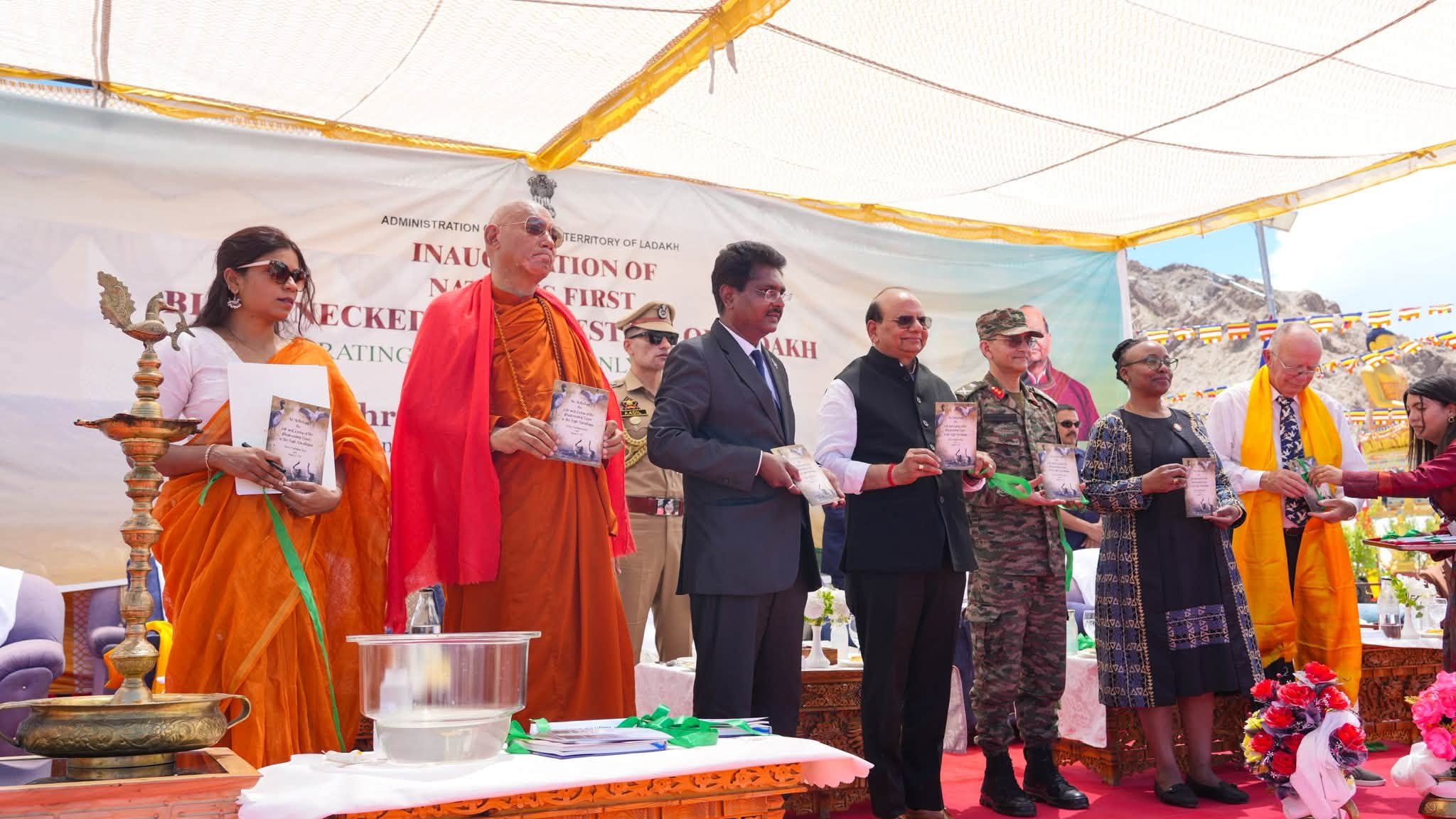
Another highlight of the inaugural ceremony was the release of several knowledge and conservation publications by the dignitaries, highlighting the growing body of research and documentation around the Black-necked Crane and its habitats. The releases underscored the importance of combining scientific knowledge with community participation and long-term conservation action.
As part of MIMC's long-term conservation vision, the Save the Himalayas Foundation has adopted the Tso Kar wetland as part of its conservation efforts. Tso Kar represents the extraordinary ecological wealth of Ladakh's high-altitude wetlands and is an important habitat for the Black-necked Crane.
MIMC and the Save the Himalayas Foundation are also hoping to establish a dedicated Research and Conservation Centre with a field station at Tso Kar, supporting scientific research, ecological monitoring, education and long-term conservation of this unique ecosystem.
The initiative reflects MIMC's broader vision of bringing together spirituality, science, education and conservation for the protection of the Himalayan environment.
The Festival also reaffirmed the importance of partnership with the UT Administration and the Department of Forest, Ecology & Environment, whose support helped bring together the institutional, scientific and conservation communities for this landmark gathering.
The International Black-necked Crane Festival concluded with a call for the Black-necked Crane to become a lasting symbol of friendship, harmony and peace across the Himalayas, while strengthening collective efforts to ensure that these magnificent birds continue to return to the wetlands of Ladakh for generations to come.
“Let the cranes continue to fly freely across the Himalayan skies. Let our wetlands remain alive, our mountains remain protected, and our children inherit a Himalaya as beautiful and generous as the one we received,” Ven. Bhikkhu Sanghasena said